Showing posts with label adult lit. Show all posts

Sunday, May 19, 2013

The Year of the Flood by Margaret Atwood ****

I read Oryx and Crake quite a few years ago now.  It's about what happens to the world when the eventual day comes when there are too many people & most of them are living in a horrible state.  It's one of my favorite post-apocalyptic books.  So imagine my surprise when I opened up this book after buying it at a grab-bag sale at the library & seeing that this is the sequel.  Or rather a sort of prequel.  Or maybe just the same story, but told from different characters' views.  Whatever it is, I liked it.
This vision of what happens is from two women that somehow live through the "Waterless Flood"--the plague that kills most of humanity in the not-so-distant future.  The first is Toby, a woman that has lived the typical brutish American life of the future--has to drop out of college because her parents can't continue to pay for it, parents pass away, & she's left fending for herself in a very unfriendly world.  She works at Secret Burger, a fast food restaurant of that serves burgers made out of God-knows-what, hence the name.  But after Toby's boss assaults her repeatedly, she escapes to a different world, the world of the God's Gardeners.
Ren is a young woman who was raised with the God's Gardeners for most of her young childhood.  The cult/religion/survivalist group believes in being strict vegetarians & learning how to take care of themselves without any outside help.  They are waiting for the "Waterless Flood" to come, when the world will be wiped clean again by God & the Gardeners will rise up & take over the stewardship of the Earth just like Noah & his family.  They never write anything down, but memorize animal names & celebrate holidays like Saint Dian Fossey Day & Saint Euell Gibbons Day.  Ren came here with her mother when she left her father for Zeb, a man with a shady past but who knows how to take care of himself.  He teaches the Gods Gardeners how to survive on the gang-ridden violently corrupt streets & is Ren's father figure while she is young. 
The action mostly takes place after the Flood has killed off most of the human population.  Toby has survived by using the skills she's learned from the Gardeners & her own father.  Ren has survived only because she was on quarantine at the upscale brothel she works at as a dancer.  Both women flash back to how they've gotten to this point, & how they might possibly survive from this point on.
My only wish was that I'd more recently read Oryx and Crake so I could have put the puzzle pieces of this story together with the other better.  But suffice it to say I enjoyed this book without having done so. 
Disturbing yet hopeful, I highly recommend both books.

Thursday, May 2, 2013

The Hangman's Daughter by Oliver Pötzsch ***

The idea is very intriguing--using your own family's history, write a mystery novel with your relatives as characters!  That's what Oliver Pötzsch did about his ancestors, the Kuisl's, a family of professional executioners.  Set in Bavaria in the 1600's, after the 30 Years War, Jakob Kuisl is the hangman for the town of Schongau.  When a group of children that played together start showing up dead, one by one, Jakob is charged with proving the local midwife innocent of the crimes.  With superstition, allegations of witchcraft, hidden treasure, & hired swords, the action is very intense & the plot thickens nicely.
I was excited to find Schongau in a modern German atlas that my husband has.  He's a high school German teacher, but more importantly he loves history, so when I told him where & when the story was taking place in the book he knew immediately that the 30 Years War was over, but that it had decimated Germany.  The whole area was left in poverty & ruin, & it took many years for the people of the area to get back to what their lives had been before the war.  The war had been very brutal & been fought on German soil, with many atrocities performed on both sides of the conflict.  He told me that many people, especially not from Europe, don't know anything about this war & why it was fought.  We think that the Protestant faith just came about when Martin Luther nailed his list on the door of the church, but that was just the beginning.  The 30 Years' War was the fight for control of Europe--would each country remain firmly Catholic, or would they become Protestant?
I liked the setting, the characters, & the action of the book.  My only personal, petty issue was that I was hoping for a bigger mystery in the end.  I was a little disappointed by the conclusion & found it lacking in believability, but overall it was a great read.  I don't know if I'll read any more of the books Pötzsch has since written about his famous ancestors (they seem to be a series of mysteries), but I definitely don't regret the time I spent reading this book.

Tuesday, April 2, 2013

Troubles by J.G. Farrell *****

My grandfather emigrated from Ireland when he was about 18 years old, came over on a ship in the 1920's.  His older brother was already here in the Midwest, & after he met my grandmother & settled down he opened a bar & grill.  He died when my mom was in her early 20's, before she'd even met my dad.  So I never met the man, but his presence has loomed large in my life none the less.  St. Pat's Day is always celebrated & I grew up hearing the usual stories about how awful it was in Ireland when he left & how the British were just devils over there.  Don't get me wrong, my family wasn't ever very political in regards to Ireland, but I think that idolizing of the IRA was pretty normal in the US back in the day. 
Troubles will have to go down as one of the most memorable books I've ever read.  I know for a fact that the characters will stay with me for a lifetime.  And most importantly it has forced me to look at Ireland in a different way, in a way that takes some of the righteous, rosy sheen off of it.
The year is 1919 & British Major Brendan Archer has just been released from the hospital with wounds he'd received fighting in The Great War.  He doesn't have any family left except an aged aunt, & maybe a fiancee...he's not sure.  He kissed the girl, Angela, when on leave in 1916 at a resort in England & she's written him quite faithfully the whole time ever since.  With no where else to go & much to forget, he decides to visit her in Ireland at the decaying resort her father owns:  The Majestic.
I'm not much of one for symbolism in literature--I know it's there, but I hate analyzing things that much.  But it's hard to ignore the symbolic people of this book.  The Major is the Young Englishman, the one that is reasonable & understands the inequality of living in Ireland at this turbulent time. 
Edward Spencer, Angela's father, is Old England personified.  He thinks the Catholic majority is barely better than animals, ignorant & useless.  He uses them, & is totally surprised when he finds that they have also used him.
Sarah Devlin, a local girl & friend of Angela's, is Ireland.  She is Catholic, quick-witted, at turns very charming & very cruel. 
The symbolism doesn't stop there-The Majestic itself is dying like the English in Ireland.  The vegetation trying to take over the whole building, but there is always a reminder that it was there.
I think the most important thing that has struck me about this book is the way that Ireland back then was populated by two kinds of people who both considered themselves Irish--the Catholic "natives" & the Protestant "usurpers".  Usurpers that had been there for over 400 years, yet were still separate.  They were a massive part of the society of Ireland for those 400 years, but their role was suddenly & violently removed back in the 1920's. 
I see an Ireland that was full of conflict by choice & bigotry.  It was, & while I was growing up it still was, nothing better than the conflict of Israel & Palestine.  I think because I'm American, that I was raised on the story that the "Old Country" was a wonderful place but for the damned Brits, that I'm surprised by the realization that neither side was "right".  Childish, I know, but sometimes it takes awhile to learn the full story.
A most excellent book, with far more to offer than what I can write here.  I recommend it to all.

Sunday, March 3, 2013

Night of the Living Trekkies by Kevin David Anderson & Sam Stall *****

Imagine, if you will, that you've survived two tours in Afghanistan.  Now imagine that you're working at a second-rate hotel in Houston as a glorified bell boy.  Now imagine that the GulfCon Star Trek convention has come to your hotel.  And now, to throw the cherry on top, imagine that everybody is turning into flesh-eating zombies.  And there you have it.  The funniest book I've read in awhile.
Jim Pike doesn't want to do any kind of job with any kind of responsibility ever again after loosing a couple men in Afghanistan.  But when the zombies attack Houston, Jim is left in a position where he has to do the right thing--kill the heck out of every walking dead he comes across.  Along the way he meets "Leia", a beautiful Amazon of a gal who happens to make extra money by dressing up as Princess Leia & making movies where Trekkies go off on Star Wars fans.  Also Gary, the ultimate Trek trivia buff; Willy, a member of a local red shirt league, & a massive Klingon that makes custom blades to sell to the followers of Trekdom.  Throw in also his younger sister who happens to be at the convention also, & you've got a rag-tag group of groupies fighting their way out of the hotel from hell.
Yes, you have to be a Star Trek fan to enjoy this book.  The constant references to the show are hilarious & on the mark every time.  I kept waiting for the story to fall apart, but it never did.  It remained excellent throughout.  I highly recommend it to anyone who loves the show (original, Next Gen, DS9, Voyager, even the cartoon), you will not be disappointed.  And I've gotten my new mantra to say to myself when times are tough:
"Now let's put aside your personal baggage and try to think about how Kirk would handle this."

Wednesday, February 27, 2013

A Tale of Two Cities by Charles Dickens *****

A close second to Great Expectations as my favorite Dickens novel, I thought I'd re-read this gem since it's been at least 14 years since I have previously.  A couple things struck me this time, one being the horrible conditions in France for the poor at the time of the revolution.  If you really consider it for a moment, how bad would it truly have to be for a people that had never known another system of government other than monarchy to decide that they didn't care what they got, they just couldn't stand living the way they were anymore.  I know that Dickens wrote with a bit of British bias about the French, especially since England was scared to death at the time that it's populace would rise up against King George also.  I'm sure the average English peasant wasn't treated that much better than the average French one, though. 
Another observation is that the horrible inequality of the haves & the have-nots can be deadly.  It's hard not to compare, just a little, to what is going on in the US right now with the rich getting so much richer while the people with the least are treated more harshly all the time.  The debate as to whether the rich should be taxed more becomes pretty moot when the "huddled masses" are angry & downtrodden.  One quote stuck with me:
Crush humanity out of shape once more, under similar hammers, and it will twist itself into the same tortured forms.  Sow the same seed of rapacious license and oppression over again, and it will surely yield the same fruit according to its kind.
No, I don't think we're on the verge of an anarchistic revolution.  But I do think that our politicians need to remember why a certain government benefit is called Social Security--it keeps our society secure. 

Sunday, February 10, 2013

The Misremembered Man by Christina McKenna ***

Two posts in one day!  Wooo hooo!  I'm trying to make up for some lost time here, since I've been a real slacker recently.  I got a new Kindle for my birthday this year (my old one had a very unfortunate accident that we won't mention...) & I was excited to see that if you join Amazon Prime you can access the Kindle Lenders Library, which means I can read one of those titles a month for free.  Pretty nice, especially since I've been locked out of my library account & can't borrow any ebooks at the moment (don't ask about that either, it's a long story involving fines.  I'm basically a mess right now.).  I didn't consider the titles, just went with the first one that looked decent to me & that's how I ended up with this book.
The setting is 1975 in rural northern Ireland & Jamie McCloone is mourning the loss of his beloved Uncle Mick.  At 41 years old he's rather set in his ways, but loneliness & the demons from his past force him to try to find some companionship.  Lydia Devine is tired of being her mother's keeper.  When an invitation to a school friend's wedding comes in the mail she realizes that finding a date for the event could be the beginning of a new life for her.  Both Jamie & Lydia's lives intersect when their well meaning friends suggest they look at the "Lonely Hearts" ads in the local newspaper.  With a series of comedic-& sometimes almost tragic-errors, the two lonely 40-somethings slowly make their ways towards each other.
The descriptions of loneliness & also of the hideous conditions in Irish orphanages are some of the best parts of this book.  It's painful to think of any child having to go through what the main character does as a child, but when you multiply that by 100's & realize that most of the orphans didn't ever get a forever home like Jaime did, you realize what a tragic place Ireland was for many people. 
I was a little irritated by what seemed to me like the stereotypical accents & typical characterizations of the characters, but that was easy for me to get over as I read the book.  Overall I recommend The Misremembered Man.  Not a great work of literature, mind you, but a touching story about family & finding them where you can.

Friday, December 14, 2012

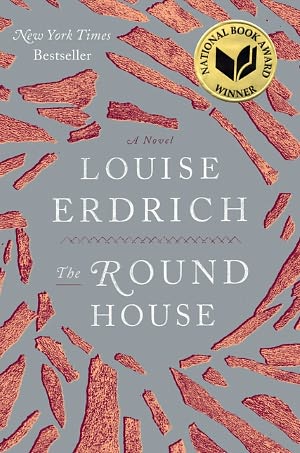
The Round House by Louise Erdrich ***

I finished this book a couple weeks ago, but have simply been too lazy to review it.  But the news coming out of Connecticut today has somehow spurred me into getting this done.  I suppose it has to do with the violence.  How can someone do this to a group of children?  These were probably kindergartners.  I cannot fathom the hatred this young man must have felt for his mother to kill not only her but her students. 
This book opens with a violent act, & as it progresses you see how violence begets violence, fear & hatred.  Joe is 13 years old & lives on an Indian Reservation in North Dakota.  The year is 1988, a year I remember well.  It starts with a boy who is a typical teenager with typical worries & joys.  And it shows how one act of violence changes him, takes away that innocence that President Obama referred to today in his speech.  He will never be the same.
Joe & his father, a tribal judge, are doing yard work on a weekend when they realize that Joe's mom, Geraldine, has been gone a long time for just picking something up at the office.  They get in the car to look for her & pass her coming back home.  But something is wrong.  When they pull up at home she won't get out of the car.  When the men try to get her out, the awful truth starts to sink in.  She's been raped.  A violent & horrible act.  As his father drives them to the hospital, Joe sits in the back seat with his mother's head on his lap.  And his world is forever changed.  He will not be the same.
The Round House is about how we deal with our rage.  What's the correct way?  I certainly don't know.  I know if I were one of the parent's of the children who were murdered today in Connecticut, I'd want to hurt someone.  But what do you do when the one who did the killing is dead already?  There's no one left to hate.  How do you continue to live? 
I will be thinking of those families.  I hope they find peace someday.  I have no idea how they will, though.

Sunday, November 18, 2012

A Storm of Swords & A Feast for Crows by George R. R. Martin ***

Sometimes there's nothing more painful than to get heavily invested in some characters in a book.  When you've been experiencing their lives for awhile, it seems as though they should listen to you, the reader, and do what you feel would make sense for them to do.  You know them, after all, you've been through a lot with them and you know what's best for them.  But do they listen?  Never.
That's been my experience with the latest books I've read of The Song of Ice and Fire.  If these people would just listen to me, it would all be just fine.  Take the other direction.  Or hey, that's not who you think it is!  It's whats-his-name!  Or why the heck can't you figure out what's going on?  I have!  Just hole up in some forest in Westeros and wait for the grand entrance of You-Know-Who.  Cause it seems as though every direction these characters take leads to more trouble.  I'm getting exhausted for their sakes!
And that brings me to my other frustration--the pace became incredibly slow over these past two books also.  Scenarios that could have just been summed up later were laboriously acted out in detail.  It got to where I almost wanted to just skim ahead and see if anything developed.  I didn't, but especially in A Feast for Crows it wouldn't have mattered--nothing really did develop.
Now that I've gotten that out of my system, I do still like these books very much.  I am heavily invested in the characters as I said before, and I'd just love for them to be ok.  Might not happen ever, but I'd sure like that.  Obviously it's well written in that I sometimes have to remind myself that these folks don't really exist!  In fact their whole world doesn't.
I'm going to take a break from the last book in the series and give myself and the characters a much needed rest.  Maybe when I resume I won't be so anxious for them!

Tuesday, October 30, 2012

A Game of Thrones & A Clash of Kings by George R. R. Martin *****

So I'd heard about this series via Facebook friends who were either watching the show on HBO or reading the books.  Since I don't have HBO & I needed a good book to suck me in, I started reading A Game of Thrones. 
As you can probably figure out, I liked it.  I liked it so much that instead of reviewing it on here, I got the next book from the library & started in on that one.  As it stands now, I just picked up the third one, so I figured if I'm gonna ever get these boys talked about I better get crackin'!
Westeros is a large island nation that has been ruled by Robert Baratheon for the past 10 years.  He gained the right to the Iron Throne when he killed the heir in hand-to-hand combat with a war hammer.  If that sounds brutal, then you better not read these books.  Based loosely on medieval England, but with a lot of cool stuff like dragons, direwolves, & zombie folks that live in the cold wastes of the north, I've loved ever minute I've spent with my nose in these books.  The main characters are of the family Stark, lords of Winterfell & past Kings of the North.  Lord Eddard Stark has 5 children that Martin delights in messing with as he unfolds his tale.  Every time I think one of them will finally get a break, BAM! he throws some god-awful obstacle up against them again. 
These books are graphic in their depiction of violence & honest in how people lived in medieval times.  Most lives were ugly, brutish, & short.  But the drama & historic sweep of the novels are wonderful.
That's enough writing about it.  I've gotta start book 3!!

Wednesday, October 17, 2012

The Buddha in the Attic by Julie Otsuka ****

I've never heard the radio play by Dylan Thomas called Under Milkwood performed, though I always wanted to after I read it.  I got interested in Thomas when I read some of his short stories back when I was in college.  Sometimes they annoyed me & I couldn't finish them, but other times they were so right that they are singed into my memory.  One short story in particular I will remember forever, but I haven't been able to find it again.  I don't know where I read it but it's one of those quests that will define my life--where is that story?
The Buddha in the Attic reminds me of Under Milkwood because of the way it is written.  You get to hear the inner voices of a group of people, a community, what they're thinking & how they're living.  Thomas wrote of a Welsh fishing village, but Otsuka writes of the community of Japanese picture brides that came to the US after the turn of the century.  I know it sounds very different, but for some reason it was rather similar to me.
I can't imagine how brave & scared those women had to be, coming to a totally foreign land to marry men they'd never met, men that they only had pictures of & letters full of promises.  When they got to our shores many found that not only were their new husbands not the men in the pictures, but they were desperately poor.  These women who hoped for a better life across the ocean found themselves in just as much hardship as what they'd left.  And through this book their voices speak again, about the women that started laundry businesses with their husbands, or started farming rented land.  Or worked as maids for the rich ladies of San Francisco, or became prostitutes.  You hear them talk of how they learned to love their husbands, or never stopped hating them.  Of how they were worked almost to death, & had to claw their way up the ladder of success.  You hear them mourn the loss of children & grow weary at the birth of yet another. 
You get to become part of their community for a short while, just as you became part of the fabric of Milkwood for a short while too.  But unlike Dylan Thomas' fictional village, the story of the women of Japan who came to America is real.  And it comes to a screeching halt when their homes, stores, businesses & farms are suddenly empty & abandoned.  It ends in 1942. 
A very good book.  It left me haunted by voices.

Friday, September 14, 2012

All the Pretty Horses by Cormac McCarthy ***

I've always loved horses.  Watching them run in a horse race is one of my favorite things to do, though I've never seen a race live--just on TV.  I took a riding class in college for one of my PE credits & learned to ride English.
But I have to admit that I still sometimes get scared of how big they are.  I had a lot of trouble when I was younger being assertive with them, letting them know I was boss.  I haven't ridden one now for 20 years, so I don't know how I'd handle it.  I've changed a lot in the past 20 years, I might be more confident about being in charge.  Or I might be less.
John Grady Cole is the hero of All the Pretty Horses, and he has a great love of the animals.  He seems to be able to sense things about them that others can't, and he values them almost as much as he values people.  He's a very loyal young man with a firm sense of who he is.  And he's only 16 years old when he and his pal Lacy Rawlins decide to head south into Mexico to seek their fortunes.  John Grady has nothing to lose--the ranch he grew up on was owned by his maternal grandfather.  When his grandpa dies the ownership went to his mother, who is a want-to-be actress who hates living on the ranch.  His parents are estranged, especially after his father was presumed dead during WWII while a POW in the South Pacific.  And so the ranch will be sold.  And everything that's important for John Grady will be gone.
This story of the boys' misadventures in Mexico has some humorous moments, especially whenever Rawlins is involved.  You can just hear these boys talking to each other in their Texas drawls, Rawlins wearing his new boots, breaking some horses.
But mostly the story is about the brutality of our southern neighbor.  The absolute and irrevocable justice of life, the common story of wrongful death.  I wish I could say Mexico has changed a lot since the 1950's, the setting for this book.  But as many of us know, the violence of Mexico lives on, and tries to spread over the border into the US constantly and successfully.
Quite a few years ago this book was the choice for the Reader's Review on the Diahn Rehm Show on NPR.  I hadn't read it yet, but I remember one of the readers mentioning that the profound reasoning and deep introspection of John Grady Cole just didn't fit with any 16 year old boy he'd ever met.  I have to agree.  I don't understand why the two main heroes weren't portrayed just a few years older, but Cormac McCarthy may have his reasoning.  I know this is the first of three books about this part of the country at this time, called collectively The Border Trilogy.
Overall I thought some of the imagery of the book both beautiful and haunting.  It was an upsetting book in it's violence, but not in it's presence.  It's hard for me to explain, but maybe it's because of it's unfairness.  I think as I get older I've become less of a realist and more shallow in some ways--I just want to read something where everyone is OK in the end.
This was a beautifully written book, but I don't see myself reading the other two books in the trilogy.  I just wasn't able to take the reins of this book and control it--in the end it controlled me and got me down.

Wednesday, August 8, 2012

Salvage the Bones by Jesmyn Ward ****

This summer we went down to the Gulf for vacation.  Our first stop was Biloxi, Mississippi.  We went directly to the tourism center, which is housed in a beautiful antebellum mansion right on the beach.  It was a gorgeous house & Puppy was especially impressed with the porches on both the first & second floors that had some nice ceiling fans.

Imagine my surprise when I found out that this building had only just opened last year.  The original house, which had stood there for many years, was completely destroyed by Hurricane Katrina.  Biloxi had painstakingly rebuilt it to look exactly like it had before.

As we drove along the main drag we noticed several blank spaces in between other homes & businesses.  It was then that the destruction that Katrina had unleashed on the gulf coast really hit home for me.  Being from the middle of the US & not having much experience of being around the ocean I never really could wrap my head around the images I saw of the post-Katrina apocalypse.  Being there made it much more real.

Salvage the Bones is about the days leading up to Katrina & it's immediate aftermath.  It's the story of Esch, a 14 year old girl living in poverty in Bois Sauvage, Mississippi.  Her mother died 6 years ago giving birth to her little brother.  She lives with her drunken father & her 3 brothers:  Randall, the oldest who takes care of everyone; Skeetah, who loves his pit bull China more than most people; & Junior, who's lived his life not knowing his mother & being raised by Esch & Randall.

The family lives in extreme poverty on a patch of land called The Pit just outside of town.  Never is there any reference in the book to there being a female that Esch calls friend.  It's just her & her brothers & their friends--that's the whole circle of her world.  She's in love with Randall's best friend, Manny, who uses her for her body & then never acknowledges her otherwise.  She discovers that she's pregnant just as Skeetah's dog China gives birth to her first litter of puppies, & from that moment on her story, China's story, & the story of Medea (she is reading Bulfinch's Mythology for school) all become intertwined as the book unfolds.

I'd never heard about this book before, even though it won the National Book Award a few years back.  I wonder if maybe it's because of the references to & descriptions of dog fighting, which has come more into the spotlight since Michael Vick was arrested for it.  It's such a horrible sport, but the way Ward describes the bizarre way in which these boys love their dogs, yet fight them so brutally, is mesmerizing.
 
Love & death.  The two eternal mysteries, told in a compelling & touching way by Jesmyn Ward.  Katrina the destroyer--it's the stuff of mythology.

Saturday, April 28, 2012

The Secret Scripture by Sebastian Barry ****

I think pretty much everyone who speaks English knows the saying, "Better late than never!"  I feel that lately it's become the best description of everything I do.  Not sure why I've gotten into this mode, but I can't seem to get anything much done in a reasonable amount of time.  I hope the above saying is true, because I'm awfully late in reviewing this book!
I think that same old adage could be used in conjunction with this book.  Is it better to find something important out eventually?  Better to know it in the end than to have never known it at all?
Roseanne McNulty is an ancient woman living in a mental health institution in County Sligo, Ireland.  No one is quite sure when she became a patient there, but the head psychiatrist is in charge of determining which patients are able to go back into society as the old building is being torn down.  Roseanne, unbeknownst to anyone else, is quietly writing down her memories & hiding them under the floorboards of her room.  Meanwhile, the psychiatrist is finding out her "official" history.  Those two differing accounts of an abused life intersect & diverge & we're left with a truth that is frightening & noble. 
One of the main themes of the book is the way that the Catholic church was able to rewrite peoples' lives at will, to either raise them up or cast them down.  Being cast down due to nothing more than being beautiful, being raised up despite committing injustices against others.
I liked Roseanne's character for a selfish reason--in many ways, she did nothing remarkable in her life.  She simply loved & survived.  I find this very refreshing because I think most of us are living rather unremarkable lives ourselves.  And in this book Sebastian Barry makes that a beautiful poetry.  She didn't single-handedly defeat the Catholic church.  She didn't do anything extraordinary.  But then again, she did.  She didn't give up.
Roseanne's story is unearthed very late, but you could definitely argue that it was better then never.  As the psychiatrist follows a very old trail, you begin to realize that those bread crumbs left behind to guide us back to where we came from are still worth following.  They might not form a straight line, but enough may still be there to find the way.
A beautiful & lyrical book.  I highly recommend this to others.

Thursday, January 12, 2012

The English Patient by Michael Ondaatje ***

How many times have you seen a movie of a novel before you read it?  I couldn't tell you the number I personally have seen, but The English Patient is one of those.  I first saw it when it was released in theatres back in the spring of 1997.  My husband and I saw it at the Battlefield Mall Cinema in Springfield, Missouri.  I loved the movie almost instantly--the romantic story line, the amazingly beautiful cinematography, and of course Ralph Fiennes.  I like Ralph.  A lot.
So here is the series of events that caused me to read the book 14 years after seeing the movie:  my husband finds the book laying in the hall of the high school he teaches at two years ago; he keeps it in his room and asks around to see who lost it but no one claims it; he puts it in the closet in his classroom and forgets it; about 10 days ago I'm talking with our foreign exchange student about movies we love and I mention it; Dog remembers he has the book at school and says he'll bring it home; he brings it home a couple days later after we both forget about it; I read it.  Not so dramatic, but there are so many turn along the way that might have led me to never reading it.
So, now that I've read it the question is what do I think of it.  And I'd have to say I liked the movie more.  Don't get me wrong, Michael Ondaatje's writing is beautiful and poetic.  He is a poet as well as a novelist, so this makes a great deal of sense.  A poet can convey emotion very succinctly--just a few seemingly unrelated words can be strung together and make a portrait of feeling that you can feel to your core.  But I guess I'm just a very pragmatic, practical person.  For me, there has to be a good reason for the emotion.  Why would someone shoot themselves?  To me you'd need a pretty darn good reason.  Why would someone turn their back on love when both of them desperately need it?  Again, I crave a solid reason.  And in the book, but not in the movie, for me the reasons just didn't seem real. 
Dog and I watched the movie again after I finished the book and it just confirmed my feelings about it.  I love the movie, and I think the characters from the book are carried over very well into the movie.  But I feel more comfortable with the motivations of the movie characters.
If you've neither seen the movie or read the book, I suggest reading the book first.  Then watch the movie and tell me what you think.

The Stupidest Angel by Christopher Moore ***

Overall, this book can be summed up with one word:  stupid.
But this is Christopher Moore, so I knew going into it that it would be stupid.  This man is a genius of stupidity, if that makes any sense.  He takes some really odd characters and basically makes their lives even more insane than they already were.  I was pleased to see some of the characters from two of his previous books I've read, The Lust Lizard of Melancholy Cove & Lamb, were included in this book. 
The setting is in Pine Cove, California, one of those trendy, artsy towns that you end up visiting and thinking it would be neat to live there.  And then you leave.  Basically there is a murder, a confused angel, and zombies.  Yeah, it's pretty stupid.
My only beef with the book is when the R-word comes up in reference to the angel.  In many ways I think Christopher Moore did a fairly decent job dealing with the word, but I just hate hearing or reading it at all.  I know it's out there, I know it's used by a lot of people, but I hate it and I don't see the need for it. 
Other than that, I overall recommend this book if you want to read something really stupid and silly.  If you want to read something that's silly but profound, I recommend Lamb.

Friday, December 2, 2011

The Sense of an Ending by Julian Barnes ***

Tony is remembering his first girlfriend from back in the 60's.  He's retired now, divorced, & rather confused when he gets an inheritance from Veronica's mother.  Why would he get 500 pounds from his ex-girlfriend's mom 40 years later?  He soon finds out it has something to do with his friend Adrian. After Tony & Veronica broke up back then, she started dating Adrian.  A few months later, Adrian killed himself.  Is Tony remembering the past correctly?  And what is the past, if not what we remember? 
Overall, this was a great book.  The writing was excellent & it read quickly.  You tend to feel Tony's confusion along with him, & you can become very emotionally invested in the outcome.
That said, there are two things about this book I didn't like.  The first is something that has happened to anyone who reads. You've heard of a great book, everyone says it's the wonderful.  So you get it & read it.  And you just don't quite get it.
That happened to me with this book.  It has a twist at the ending & I understood that.  But there was an aspect of it that I just didn't grasp, & it's not because the author didn't supply it, it's because sometimes I just don't get the obvious.  I don't want to give away the ending, but it's so hard not to & properly discuss this book.  So I'm going to make an announcement:

SPOILER ALERT!!!  PROCEED WITH CAUTION!!!

OK, so in the end we find out that Adrian killed himself because he'd gotten Veronica's mother pregnant.  Alright, I get that.  But what I fail to grasp is why Tony has anything to do with that.  There's the implication that maybe he somehow encouraged it in his angry letter to Adrian when he found out he & Veronica were dating.  But I don't see how that has made him some sort of accomplice to the whole affair.  I just don't get it, so if you've read this book & you understand what the heck is going on, please leave a comment & tell me!
The second thing that upsets me is the portrayal of Adrian's son.  He obviously has a developmental disability of some sort, but lame approach is taken that this is a horrible tragedy.  I guess I'm tired of seeing people with those types of disabilities as being tragic figures.  They can be tragic, don't get me wrong, but not because of their disability.  The only tragedy that I saw was the fact that a young man would rather kill himself than deal with impregnating someone, even if it is his girlfriend's mom. 
And that brings me back to the first problem--why would she leave money to Tony? 
I think I better just leave it there & start reading a new book!

Saturday, November 19, 2011

Great Expectations by Charles Dickens *****

One of the main reasons I love this book is just because of it's title.  It says it all.  Who among us hasn't had great expectations when we were younger of what our lives would be like?  We were going to be different.  Individuals, living how we wanted, not like our parents.  Not stuck in some small town or small mindset, but living large.  I was young enough when I first read Great Expectations to realize that's how I felt, but old enough to hear the nasty voice of doubt whispering in my ear. Since then I've come to realize that giving a child the gift of great expectations is actually a curse--they'll be like Sisyphus, pushing that boulder up the hill but having it crush them at the bottom in the end.
Pip grows up in the country being brought up "by hand" by his shrewish older sister & her gentle husband.  Joe, Pip's brother-in-law, is actually Pip's greatest childhood friend.  Joe is a simple & ignorant blacksmith, but his kindness & care for others makes you realize how wise he actually is.  Joe & Pip simply live for the day that Pip will be apprenticed to Joe & then "what larks!" they will have together.  But a series of events that seem to be unrelated conspire to make Pip wish to be more than he ever thought he could be, & to then give him the means to that end.
Great Expectations is about the foolishness of youth & about growing up & leaving behind those that we love.  It's about the abandoning of the people that made you good in favor of those that you think will make you great.  And it's about the journey back home after being led far afield.
It's also a book about judgement.  I can't tell you how many times I've labeled people in my mind based on some small aspect of their character that I think I've had some sort of special insight into.  It's all rubbish.  The label always comes from within the labeler-- you see something of yourself you'd rather not like to admit to in someone else.  There are several quotes from this book that I like, but by far my favorite is one where Pip refers to his great friend Herbert:

We owed so much to Herbert's ever cheerful industry and readiness, that I often wondered how I had conceived that old idea of his inaptitude, until I was one day enlightened by the reflection, that perhaps the inaptitude had never been in him at all, but had been in me.

Thanks Mr. Dickens.

Sunday, August 28, 2011

Fall of Giants by Ken Follett ****

I'm a sucker for a good historical fiction novel, and this is one!  It follows 5 families (one Welsh, one Russian, one American, one Brit and one German) from the turn of the century to just after WWI, showing how their stories meet and part while they live in those turbulent times.  Now you know there are going to be a lot of characters when you have to have a list of them in the front of the book, but these are even organized by nationality and sometimes even by job.  And I'm so glad Ken Follett did that, because I'm one of those people that has a hard time remembering who's who. 
It's a big, sweeping book, and Follett is planing of following it with two more just like it, since it says on the front cover that this is book one of The Century Trilogy.  I think it's fascinating to see how war brings very different people together that would never have met and creates a new reality that our ancestors would be rather surprised to learn about (for example:  both of my husband's grandparents never would have met each other without WWII happening).  So I can't wait for the next book, which will undoubtedly deal with WWII and how the same characters and their children experience it. 
Thanks Ken Follett for another great read!

Wednesday, August 17, 2011

The Paris Wife by Paula McLain ****

I needed a new book to read, something recent that looked good.  I can't remember where I saw this book listed, maybe on the New York Times bestsellers list, but the idea of reading a pseudo-memoir about Hemingway's first wife was intriguing. 

Hadley Richardson was from my hometown, St. Louis, and was considered a spinster at age 28 when she met Ernest Hemingway.  He was 21 and just starting his writing career, not yet the man he would later become.  They fell in love, married, and moved to Paris so Ernest could be where all the great writers of the age were:  Gertrude Stein, F. Scott Fitzgerald, Ezra Pound, and more.  There they lived for several years in what for Hadley was marital bliss, but for Ernest became a tightening noose around his neck. 

I appreciated this book on several different levels, one of which was the character of Hadley herself.  I've seen that many people who've reviewed it thought that Hadley was a wimpy character, but I found her to be quite real.  She was the only person in a circle of very bright stars that wasn't a writer and wasn't trying to be famous in some way.  She was very ordinary, and as a rather ordinary person myself I liked her.  It was as though she were trying very hard to not be eaten alive by the people around her, and somehow she came out the other end intact. 

I would like to read The Sun Also Rises now since Hemingway's life while writing it was the model for this book.  And my husband's favorite Hemingway book, Islands in the Stream, would be good to read also--it has so much to do with Ernest looking back on his life and his wives with regret and longing.  And it's obvious that though she wasn't a flashy flapper, a love-starved socialite, or a petulant  beauty queen, Hadley in many ways was the love of his life and an anchor that he lost and never could find again.

Tuesday, June 14, 2011

The Thousand Autumns of Jacob de Zoet by David Mitchell ****


First, I want to recommend a blog: Rolling Around In My Head. In general, it's a blog about the world of disabilities--having them, living with & loving people with them, working for people with them, embracing them. The reason I mention this is that the author of this blog, Dave Hingsburger, has a book club going that includes books that deal with-you guessed it-disabilities. Some of the best books I've read lately are the ones he picks. And like people who happen to have disabilities, these books aren't defined by the inclusion of disabilities. They're just great books.
The Thousand Autumns of Jacob de Zoet is first and foremost about loss.  Jacob is a young clerk sent from Holland to Japan in the very late 1700's to work for the Dutch East India Company.  When he makes this journey he loses touch with his homeland and very importantly to him, his religion.  He and his sister have been raised by his uncle, a minister, so it is very hard for him to be in Japan without any outward signs of his faith--Christianity was punishable by death at the time in Japan.  Also comes a loss of belief in the honesty of mankind, when in his process of auditing the books at the Dutch installment of Dejima he finds that the corruption of money has gotten to every level of the "factory".  Loss touches every character that touches Jacob also--loss of love, loss of a child, loss of faith, loss of youth, loss of innocence.  Because of this overwhelming feeling of loss, this book can be rather heavy.  But you can't stop reading because you want the losses to be abated, or at least to be for a higher purpose.  Sometimes, though, loss is just loss.  There is a hole and it won't be filled.

I'm sure Dave chose this book because of one of the settings--a perverse temple that claimed to care for women who were too deformed and imperfect to be missed from "normal" society.  Women who could be used with impunity and no one would be the wiser; women who were actually grateful to be cared for there because the world outside had treated them so badly.  It took a very special woman to come in and care for these "nuns"--though society could call her "deformed" also, she was confident in her knowledge and in her compassion.  She made the hell of that temple bearable for her fellow nuns, until another loss by a person far away took away the prison walls. 
I wanted, as I think most humans do, for there to be a "happily-ever-after" to this story.  But in truth, how many of us get to have that kind of clean finality?  I wanted a fairy tale ending, but I got reality.  When I was younger I craved the starkness of truth in all I read and would ridicule the cutesy endings to many books.  As I've aged I've noticed a desire to see that clean finality now.  Is it perhaps because stark reality is all around us and it's only as we get older that we see it everywhere? 
A very fine book, and another great recommendation from Dave.  Thanks.